 ExpoHive
 Awardocado
 Event Intelligence
 Event Marketing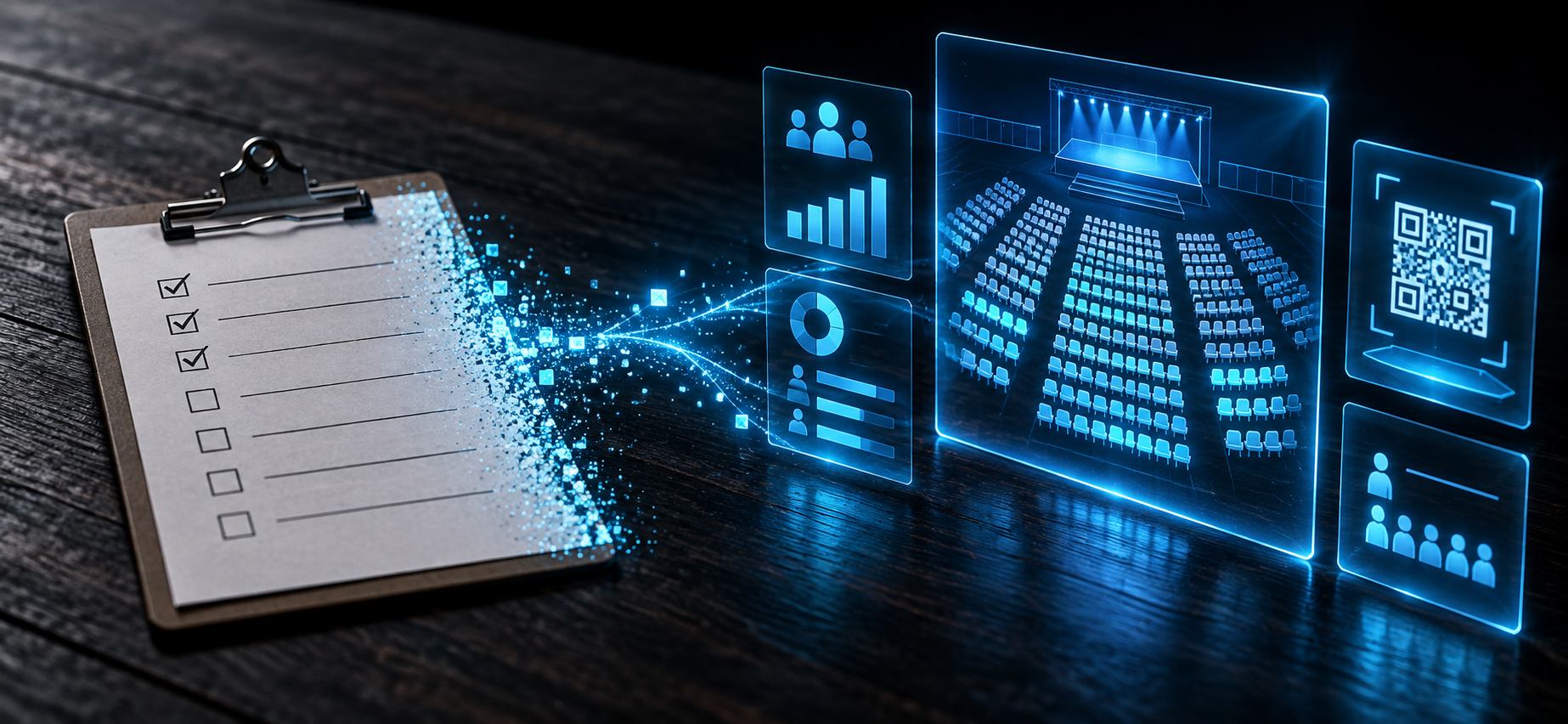
For a long time, "using technology" at an event meant a registration form and maybe a QR code at the entrance. That was it. That was the whole conversation.
But if you've planned or attended an event recently, you already know that bar has moved. Way past it, actually. Today's event tech doesn't just support an event. It runs alongside every decision your team makes, from the first landing page to the last post-event report.
So what does "beyond the basics" actually look like in practice? Let's walk through it.
In this article
- Why the old idea of event tech is outdated
- How exhibitions and expos have changed
- What smart award and recognition programs look like
- Why data is the hero of modern events
- How marketing fits into the same ecosystem
- Why this shift matters
- Looking ahead
- FAQs
The old idea of "event tech" is outdated
Ask most people what event technology means, and they'll mention ticketing or a mobile app. Fair enough, those are still part of it. But that definition describes a tool, not a system.
Modern event tech is closer to infrastructure. It's the layer connecting your registration data to your floorplan, your floorplan to your exhibitor leads, and your exhibitor leads to the report you hand your stakeholders on Monday morning. When these pieces talk to each other, an event stops being a series of disconnected tasks and starts running like one coordinated operation.
That shift, from scattered tools to a connected system, is really what "beyond the basics" means.
How exhibitions and expos have changed
Take exhibitions as an example. A basic setup gets exhibitors a booth and a badge scanner. That's the baseline, not the ceiling.
Where event tech actually earns its keep is in what happens between people. Interactive floor plans let attendees plan their visit before they even arrive. B2B matchmaking tools connect exhibitors with the right visitors instead of leaving that to chance.
Platforms like Expohive are built around exactly this idea: exhibitions work better when the event tech behind them is doing the matchmaking, not just the check-in.
What smart award & recognition programs look like
Recognition programs used to run on email threads, shared spreadsheets, and a lot of manual chasing. Anyone who has managed a judging panel this way knows how much time gets lost to logistics instead of actual evaluation.
This is another area where event tech has quietly taken over the tedious parts. Custom submission forms guide entrants to submit the right material the first time. Online rubrics keep judges focused on scoring criteria instead of formatting confusion.
Automated certificates and results processing mean the program manager isn't stuck manually generating hundreds of documents after the fact.
Awardocado is a good example of this in action: award, grant, and recognition programs run on structured event tech instead of goodwill and patience.

Why data is the hero of modern events
Here's the piece that rarely gets talked about at parties, but matters more than almost anything else: data.
Modern event tech doesn't wait until an event is over to tell you how it went. Predictive reporting can flag registration trends while there's still time to act on them. Attendee behaviour data shows organisers what's actually working. When information is available during the event, not three weeks after, teams can make real-time adjustments instead of writing lessons-learned documents nobody reads.
This is the part of event tech that turns "we think it went well" into "here's exactly what happened, and why."
How marketing fits into the same ecosystem
None of the above matters if nobody shows up. That's where the marketing side of event tech comes in, and it's just as connected as everything else.
Automated affiliate tracking, email campaigns, dynamic landing pages, and social sharing tools all feed into the same registration and attendee data used elsewhere in the event. Instead of marketing living in its own silo, it becomes another input into the same system, helping teams understand not just who registered, but where they came from and what convinced them to sign up.
Why this shift matters
Here's the truth: none of this is about chasing shiny features for their own sake. It's about giving event teams back their time and giving organisers actual visibility into what's working.
When event tech is scattered across five disconnected tools, someone on your team is spending hours stitching data together manually, usually the same week; everything else is already on fire. When it's connected, that same person can spend their time on strategy instead of spreadsheets.
That's really the difference between "basic" and "beyond the basics." It's not about having more tools. It's about having the right event tech working together in the background, so the event itself can run the way it's supposed to.
Looking ahead
Enseur brings exhibitions, recognition programs, event data, and marketing together under one connected system, so your team spends less time managing tools and more time running great events.
At Enseur, the complete event stack covers Awardocado, an awards recognition software, Exphoive, exhibition management software, and event marketing and event intelligence solutions. Event marketing covers data-driven campaigns, influencer activation, and engagement tools. Moreover, event intelligence includes event websites, mobile apps, and interactive digital photobooth creation. Visit Enseur's website to see what a truly connected event tech stack looks like for your next event.
FAQs
Q1. What are the 5 C's of an event?
The 5 C's of event management are Concept, Coordination, Control, Commitment, and Closeout. Together, they cover the journey of an event from developing the initial idea to managing execution and evaluating the outcome.
In today's events, technology supports each of these stages. From digital registrations and attendee communication to check-ins, engagement, and post-event data, an event technology platform can help teams coordinate multiple moving parts from one place.
Enseur brings these capabilities together to help event teams manage the experience before, during, and after the event.
Q2. Is event planner a stressful job?
It can be. Event planning involves tight deadlines, multiple stakeholders, changing requirements, vendor coordination, attendee expectations, and the pressure of getting everything right on the day.
However, the right systems can take some of the operational pressure off event teams. Automating repetitive tasks such as registrations, ticketing, check-in, attendee communication, exhibitor management, and data tracking allows planners to focus more on the experience and less on manual coordination. Platforms such as Enseur are designed to support this operational side of event management.
Q3. How to become a virtual event planner?
To become a virtual event planner, start by learning the fundamentals of event management and then build expertise in digital event formats. This includes understanding virtual platforms, registrations, attendee engagement, networking, content delivery, analytics, and technical support.
Practical experience is equally important. Work on webinars, conferences, virtual exhibitions, or hybrid events to understand what happens behind the screen. Familiarity with event technology platforms can also be valuable, as virtual and hybrid events often require multiple digital touchpoints to work together seamlessly.
Q4. What are the five P's of event management?
The five P's of event management are commonly described as Purpose, People, Place, Product, and Promotion. They help event planners think through why an event is being organised, who it is for, where it will happen, what experience it will deliver, and how it will reach its audience.
Technology increasingly connects these five elements. A well-planned event can use technology to manage registrations, attendee journeys, communication, networking, engagement, check-in, and post-event analytics. This is where an event technology partner like Enseur can help turn the planning framework into a more connected execution system.
Q5. Do you need a degree to become an event manager?
A specific degree is not always required to become an event manager. What matters just as much is a strong understanding of planning, communication, budgeting, stakeholder management, problem-solving, and on-ground execution.
Experience can be built through internships, volunteering, corporate events, conferences, exhibitions, and other live experiences. It also helps to understand the technology that powers modern events, from registration and ticketing to check-in, engagement and event analytics. As the industry becomes increasingly technology-driven, knowing how to work with these systems can be a valuable addition to an event manager's skill set.